The Three Starting Steps

For almost every band student who went through my dad’s band program, there were three starting steps that took place before you ever sat down in a band class. It was a selection process my dad used to identify promising musical talent.
I’m not sure whether this was the same process he himself experienced as a child. As I wrote in another post, I know he was tested early in grammar school, but given that he was only six years old, I suspect it was something much simpler than what he later developed.
Step One: The Music Aptitude Test
Every spring, my dad would travel to the elementary schools around Lancaster and give a music aptitude test to all the sixth-grade students.
The test consisted of two parts. One measured rhythm, and the other measured musical pitch and melody recognition. My dad had the entire test recorded on tape, so he simply played the recording while students wrote down their answers.
(Music Aptitude Instructions)
The students exchanged tests and graded them and from those results he identified students who showed above-average musical aptitude. Their parents would then be notified and encouraged to enroll their children in beginner band the following year.
No one was turned away if they wanted to join the band. But these students received an extra nudge — a quiet suggestion that they might have something special worth developing.
Step Two: The Embouchure Test
The second step was much less scientific.
Embouchure is the use of the lips, facial muscles, tongue, and teeth in playing a wind instrument. This includes shaping the lips to the mouthpiece of a woodwind or brass instrument. Wikipedia
My dad would study a student’s lips and mouth and decide which instrument might best suit them. Fuller lips often meant trombone or bass horn. Thinner lips suggested trumpet or French horn.
I was never entirely sure what lip condition was supposed to indicate flute, clarinet, or saxophone potential. Drummers, meanwhile, appeared to come equipped with every imaginable variety of lips.
He never actually said this to me, but I suspect there was another factor involved besides pure physiology. Sometimes instrument recommendations may also have depended on the graduating seniors and which openings needed to be filled in the band.
A practical band director learns to think several moves ahead — a little like chess, except with trombones.
Step Three: Berger and Howren Music Company
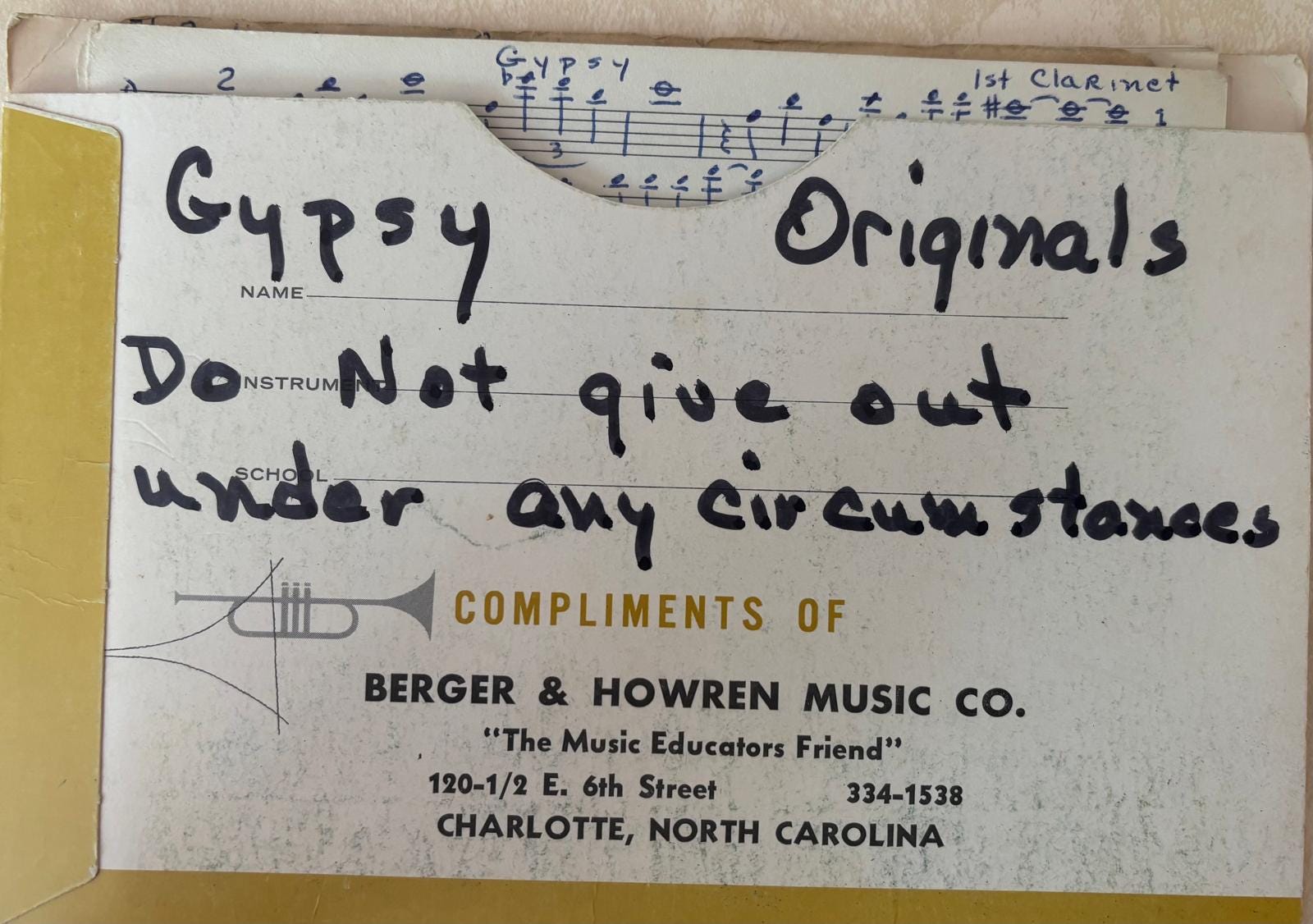
The final step usually involved Berger and Howren Music Company.
Berger and Howren existed largely to supply instruments to school band programs throughout the region. Once a student selected an instrument, parents could purchase one, with affordable payment terms.
These were not top-of-the-line professional instruments, but they were solid high school band instruments — trumpets, trombones, saxophones, flutes, and clarinets. Larger instruments like bass horns, along with drums and percussion equipment, were usually owned by the school itself.
By the time a seventh grader first walked into beginner band, most of these steps had already taken place.
The aptitude test had identified potential.
The embouchure test had pointed them toward an instrument.
And Berger and Howren had armed them to attack the Easy Steps band book.
And the band began to play.
Encore
Take a portion of the music aptitude test given to sixth grade students in the 1960’s. See how well you can do.
(Music Aptitude Test, Part 1)
(Music Aptitude Test, Part 2)